ElectroSim — CV Analysis Suite
Public · GitHubAn interactive electrochemical data analyzer built with Python, Streamlit, and Plotly — import, visualize, and process voltammetry and related data through a clean browser GUI, no scripting required.
Materials Scientist · Electrochemist
Designing nanomaterials for energy storage, electrocatalysis, and next-generation sensing.
Postdoctoral Researcher (NSF-PREM) & Adjunct Instructor, Department of Chemistry & Biochemistry, North Carolina Central University, Durham, NC.
Ranked among the World’s Top 5% Scientists 2025 — SciRank Global
Metrics from résumé; auto-syncs with Google Scholar once deployed.
I am a materials scientist and electrochemist with more than six years of post-PhD research experience spanning the United States, South Korea, and India. My work sits at the intersection of nanomaterials synthesis and electrochemistry — designing carbon nanostructures, 2D transition-metal dichalcogenides, and metal-oxide ceramics, then putting them to work in batteries, electrocatalysts, sensors, and electromagnetic-shielding composites.
I currently work as a Postdoctoral Researcher (NSF-PREM) and Adjunct Instructor in the Department of Chemistry & Biochemistry at North Carolina Central University, where I develop 2D nanomaterials for electrocatalysis, corrosion protection, energy storage, photodetection, and electrochemical and gas sensing. My doctoral work at the Indian Institute of Science focused on multifunctional carbonaceous nanostructures for magnetic, optical, and catalytic applications.
Across 95 peer-reviewed publications, two granted patents, and two book chapters, my research consistently connects fundamental structure–property mechanisms to practical device performance — from fast-charging Li/Na-ion electrodes to absorption-dominated EMI shielding.
Alongside the lab work, I build open-source scientific software — the ElectroSim series of electrochemistry data-analysis apps (Python / Streamlit, developed in Visual Studio Code), with new tools actively in development.
My research program is organized around synthesizing functional nanomaterials and understanding the mechanisms that govern their electrochemical, magnetic, and optical behavior.
Fast-charging Li/Na-ion electrode materials (LiFeBO3 cathodes, Fe3BO5 anodes), metal–air batteries, supercapacitors, and solid-state electrolytes.
Carbon-supported alloy and single-site catalysts for HER, OER, ORR, and N2 reduction — including noble-metal-free electrodes for Zn–air batteries.
Transition-metal dichalcogenides and bismuth oxychalcogenides; substitutional doping for devices, photodetection, and electrochemical/fluorescent sensing.
Non-enzymatic detection of H2O2, dopamine, ferric ions, and biomolecules using engineered nanocomposite electrodes.
Carbon-encapsulated magnetic nanoparticle composites with absorption-dominated shielding driven by graphitization control and ferromagnetic resonance.
Graphene-oxide corrosion-inhibition coatings and heterogeneous catalysis for dye- and drug-degradation.
Multi-technique spectroscopic characterization of materials. Nonlinear optics — Z-scan measurements and optical limiting in carbon and garnet nanostructures.
Open-source Python / Streamlit apps — the ElectroSim series — that turn raw electrochemical data into interactive, publication-ready analysis. See the Software page →
North Carolina Central University, Durham, NC, USA
Teaching General Chemistry.
North Carolina Central University · Advisor: Prof. Fei Yan
2D nanomaterials for electrocatalysis, corrosion, energy storage, photodetection, and electrochemical & gas sensing.
University of Ulsan, Republic of Korea · Advisor: Prof. Youngil Lee
Fast-charging Li/Na-ion electrode materials; two granted Korean patents.
CSIR–Central Electrochemical Research Institute, Chennai · Advisor: Prof. A. S. Prakash
Metal–air batteries, water splitting, and solid-state electrolytes.
Indian Institute of Science, Bengaluru · Advisor: Prof. Balaram Sahoo
Carbon-based nanomaterials for energy applications and EMI shielding.
Materials Research Centre, Indian Institute of Science (IISc), Bengaluru
Thesis: Synthesis and development of multifunctional carbonaceous nanostructures for magnetic, optical, and catalytic applications.
Banaras Hindu University, Varanasi · CGPA 7.84/10 (First class)
Sikkim Manipal University · 76.0% (First class)
Indira School of Career Studies, Pune · 82.3% (First class)
Banaras Hindu University, Varanasi · 74.4% (First class)
95 peer-reviewed journal articles and conference papers. Search the full list below, or view the complete, always-current record on Google Scholar.
Gold contour marks papers where I am an equal-contributing (co-first) author.
Microwave (MDPI)
Special issue, Catalysts (MDPI)
Peer-reviewed 187+ manuscripts for 37 journals across Elsevier, Springer Nature, Wiley, and MDPI.
187+ peer reviews across 37 journals. The verified Elsevier Certificates of Reviewing are shown below; the complete, up-to-date record is on my ORCID profile.
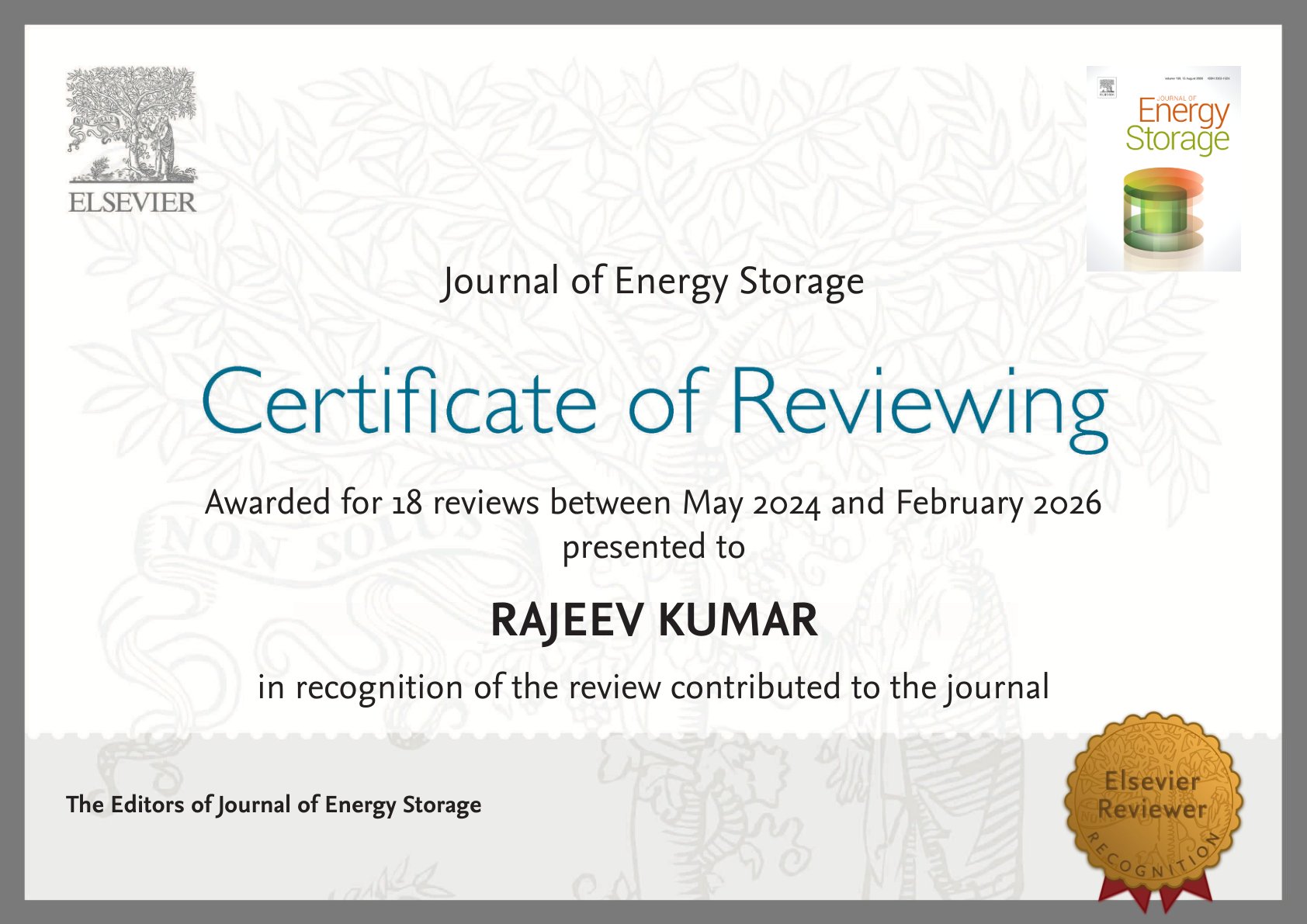
18 reviews · Between May 2024 and February 2026
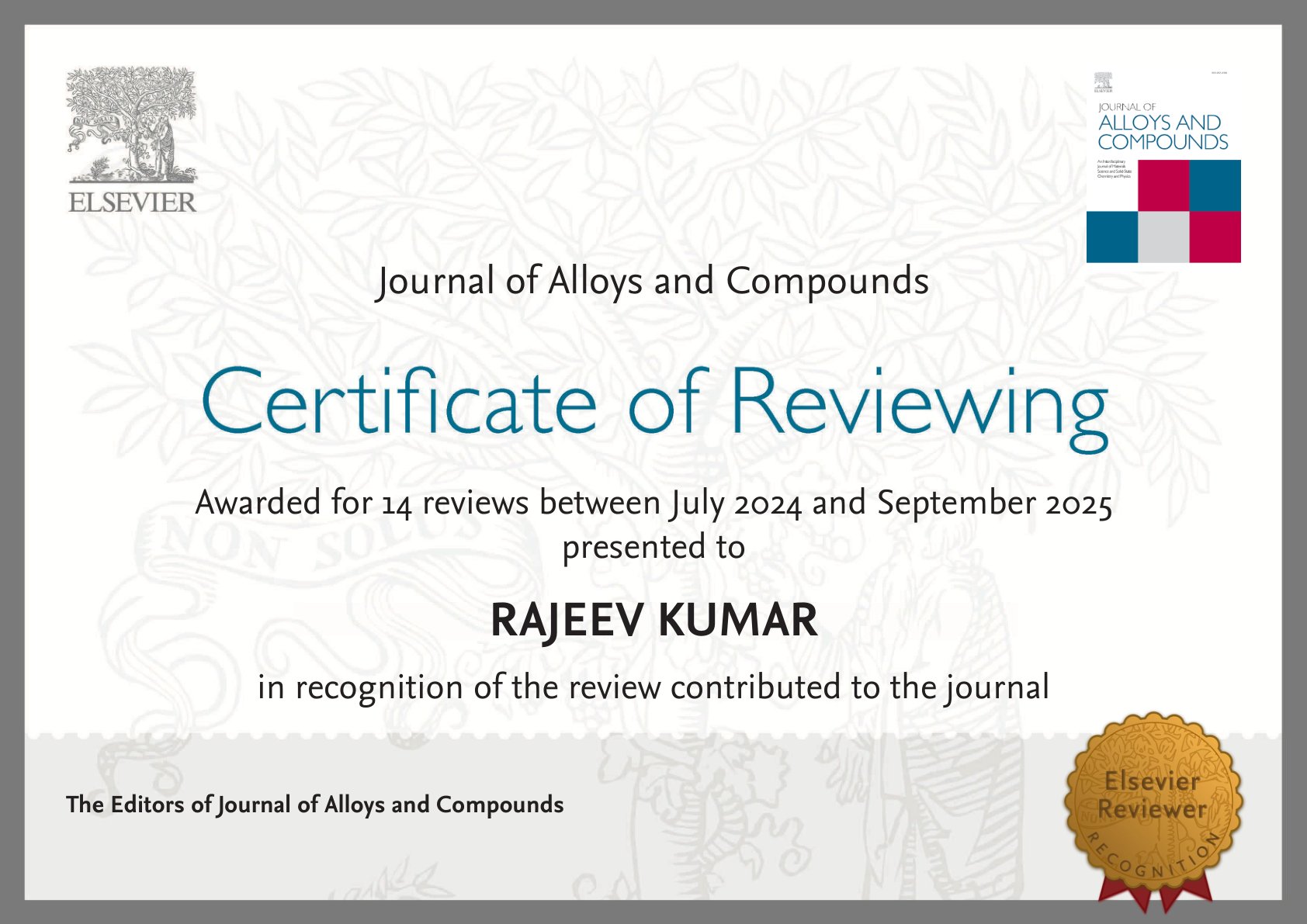
14 reviews · Between July 2024 and September 2025
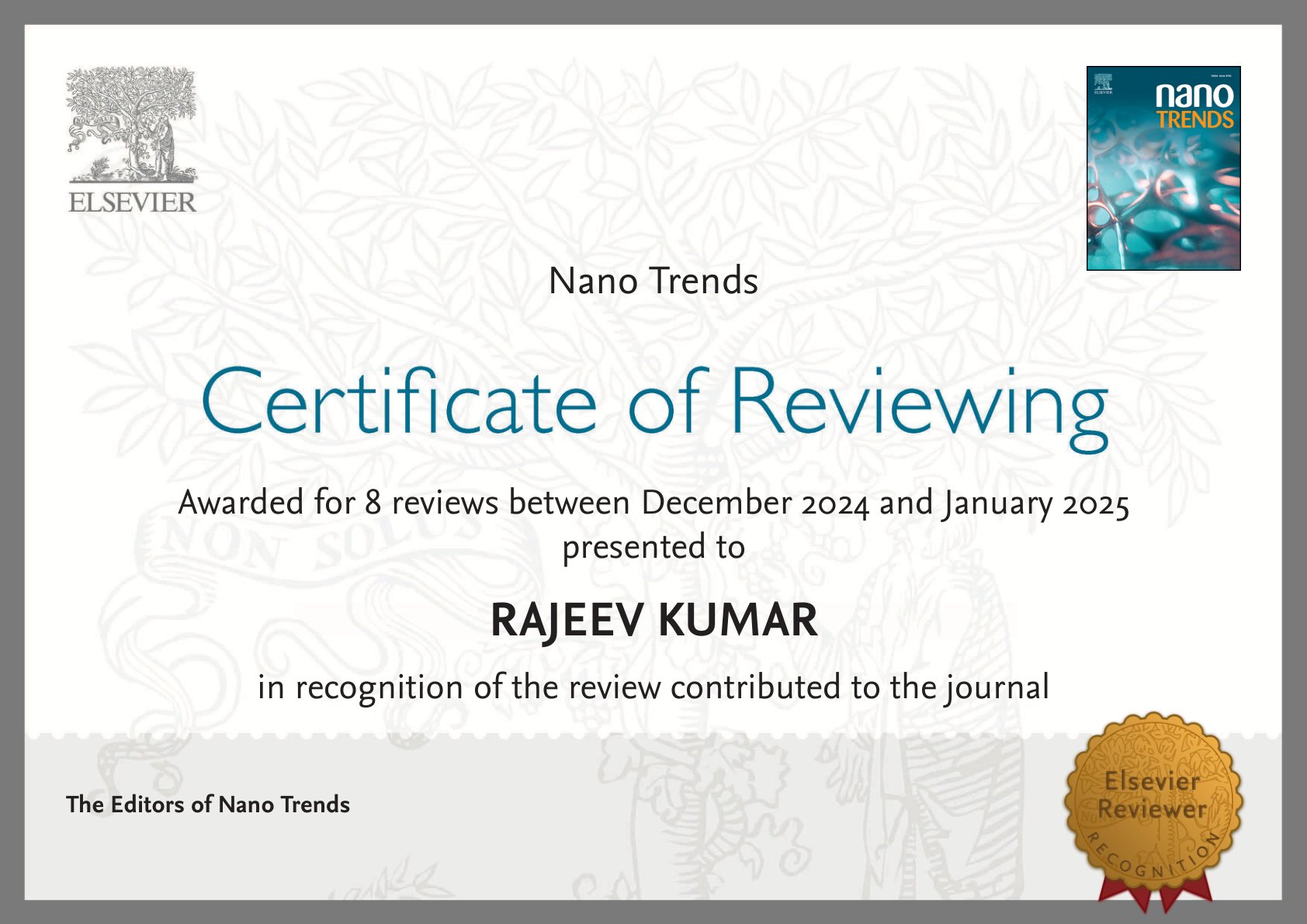
8 reviews · Between December 2024 and January 2025
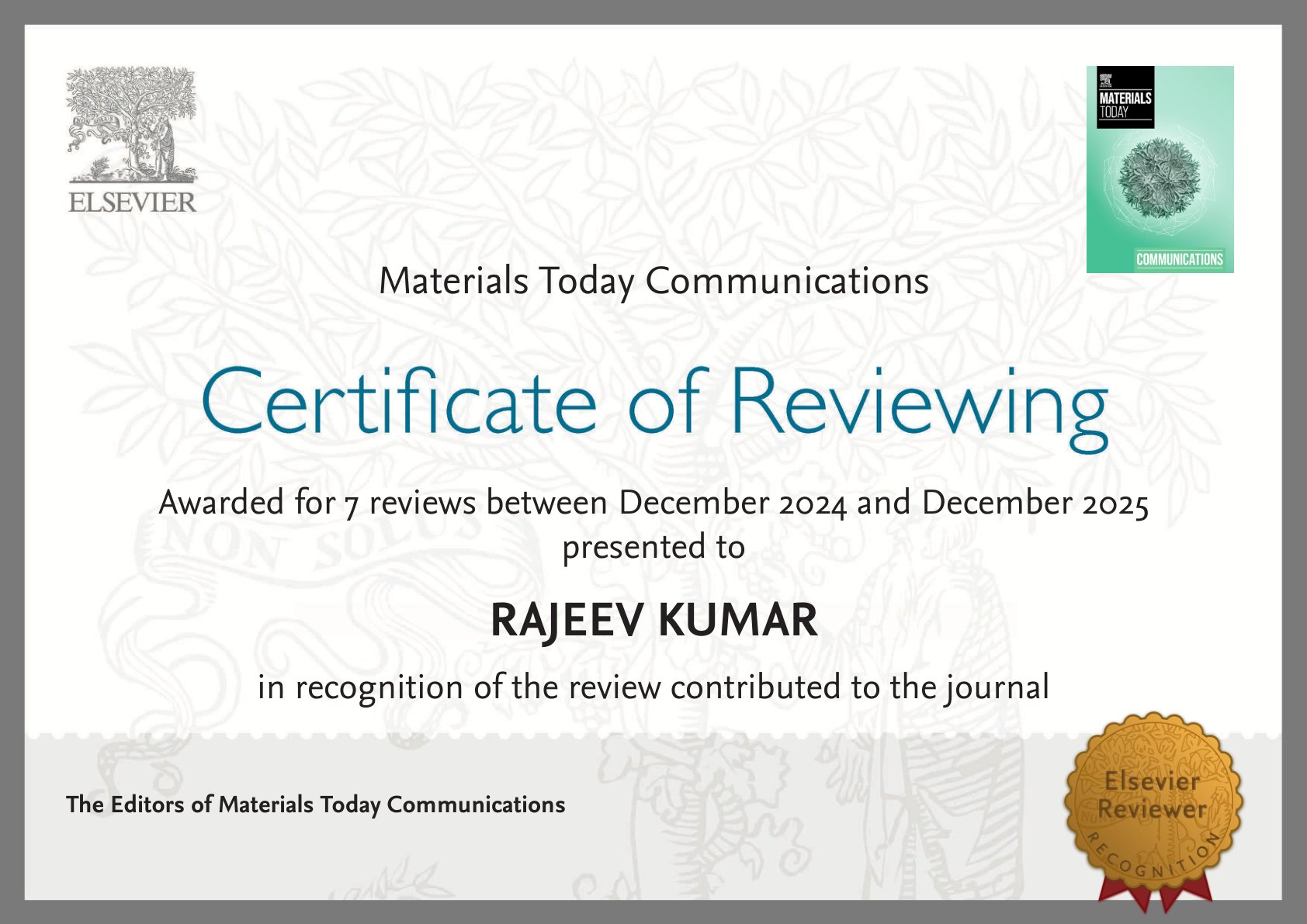
7 reviews · Between December 2024 and December 2025
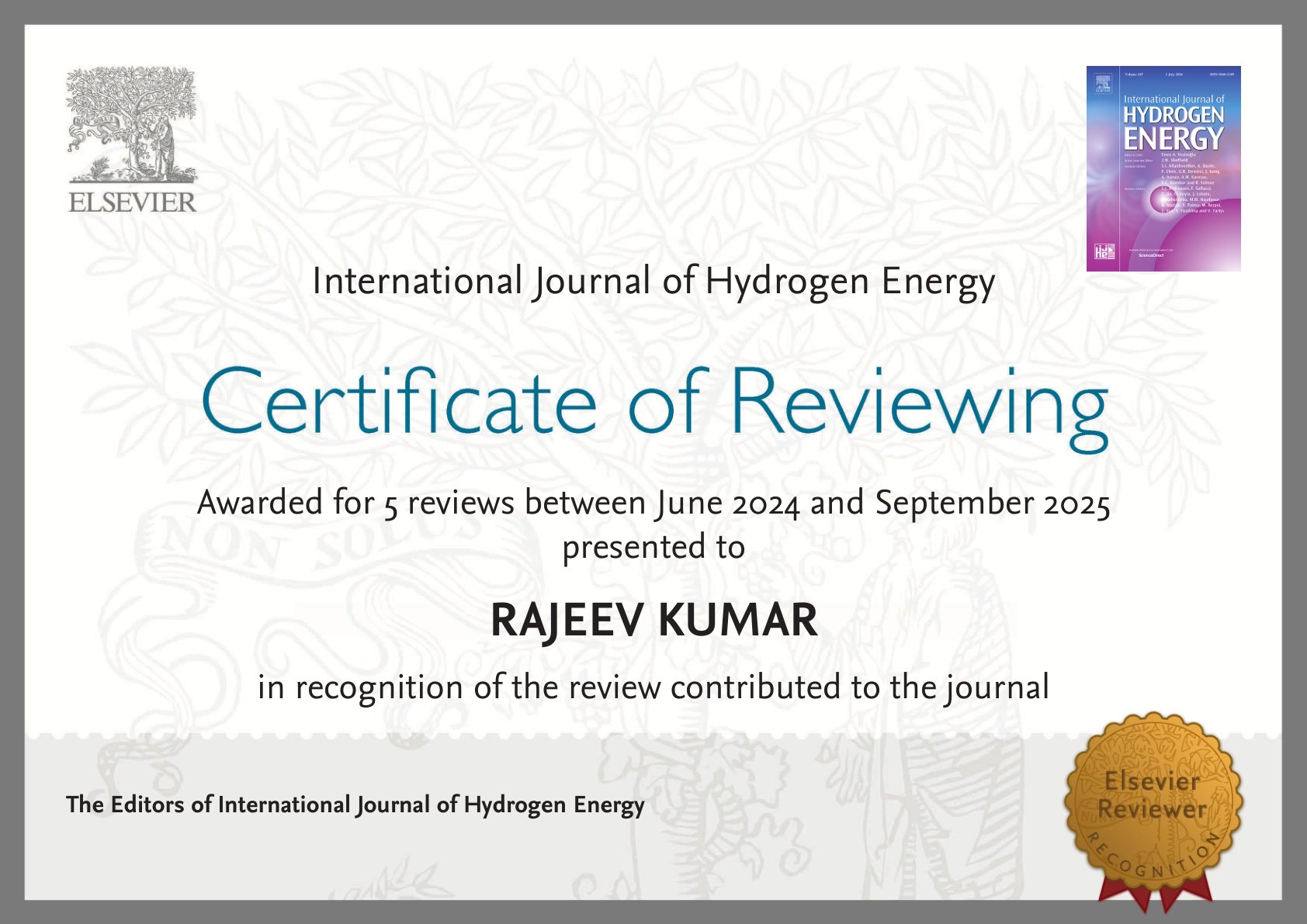
5 reviews · Between June 2024 and September 2025
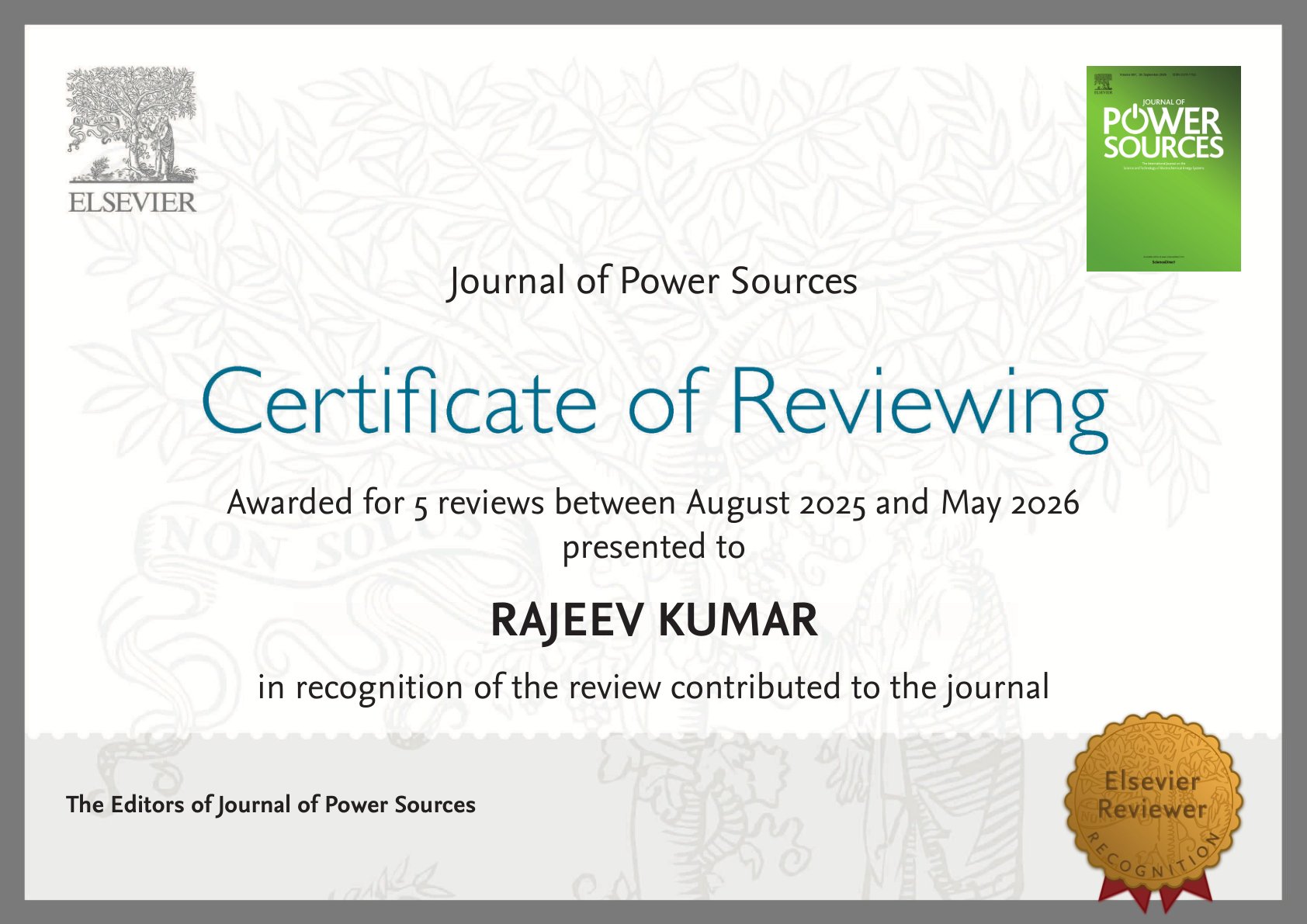
5 reviews · Between August 2025 and May 2026
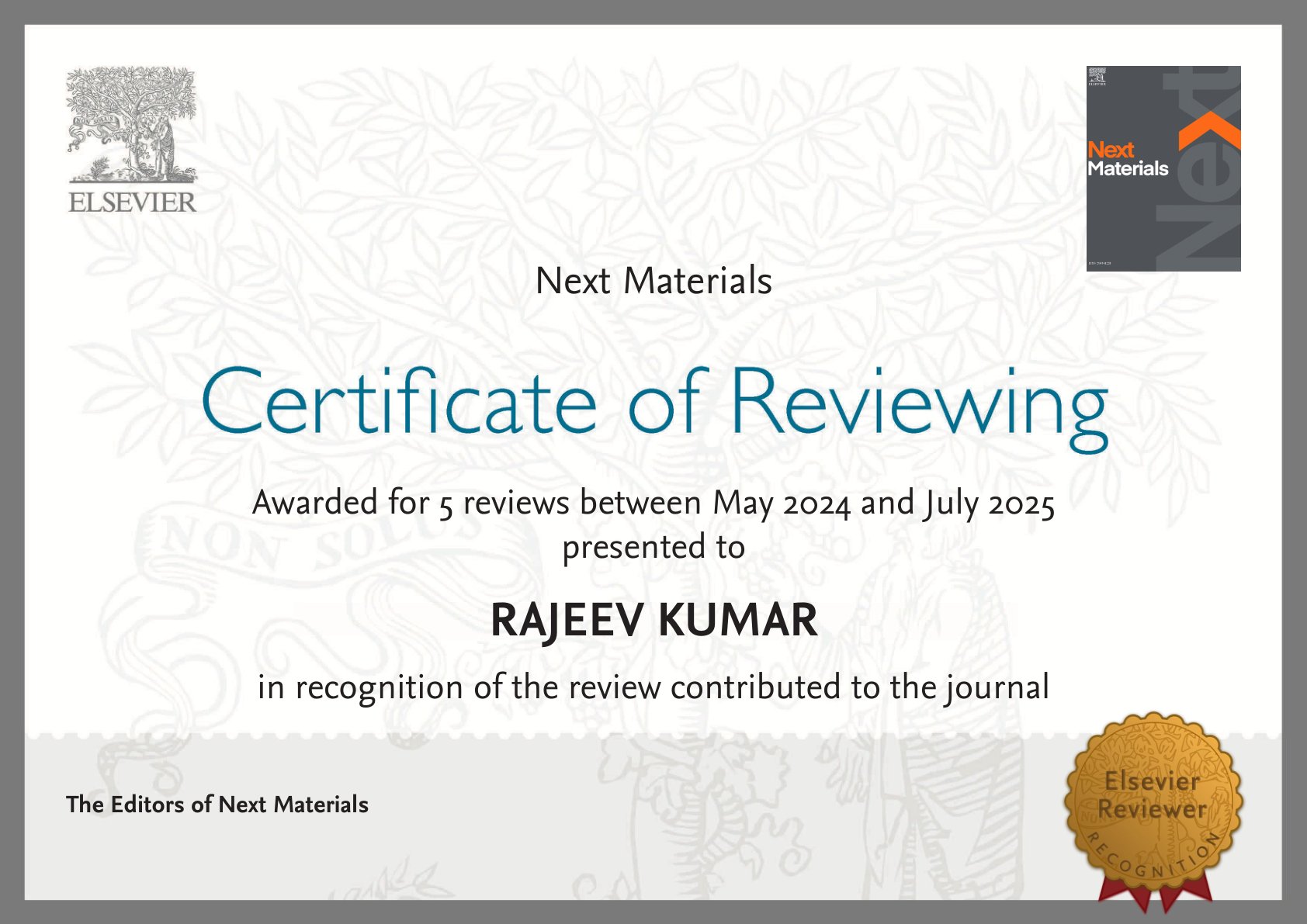
5 reviews · Between May 2024 and July 2025
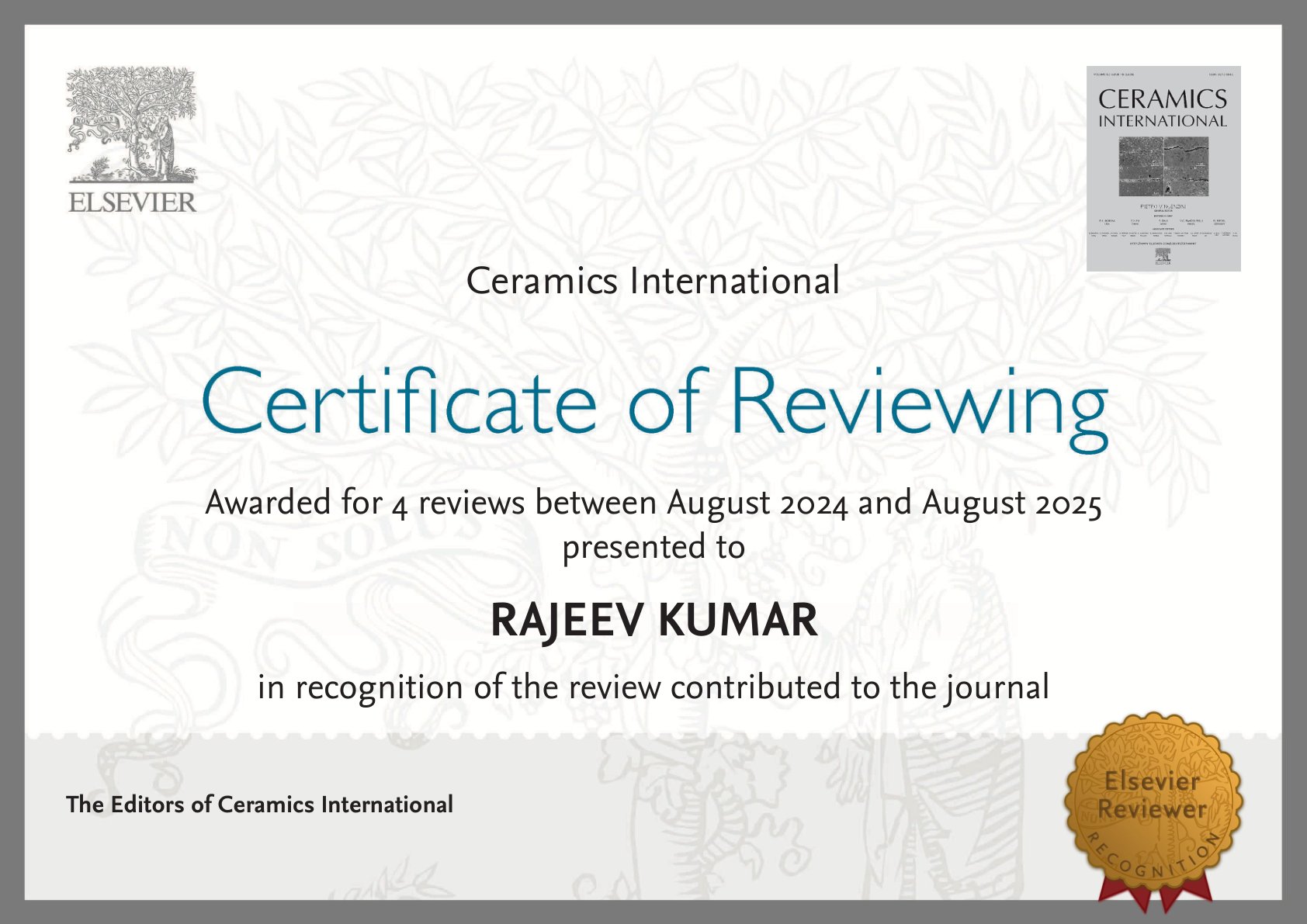
4 reviews · Between August 2024 and August 2025
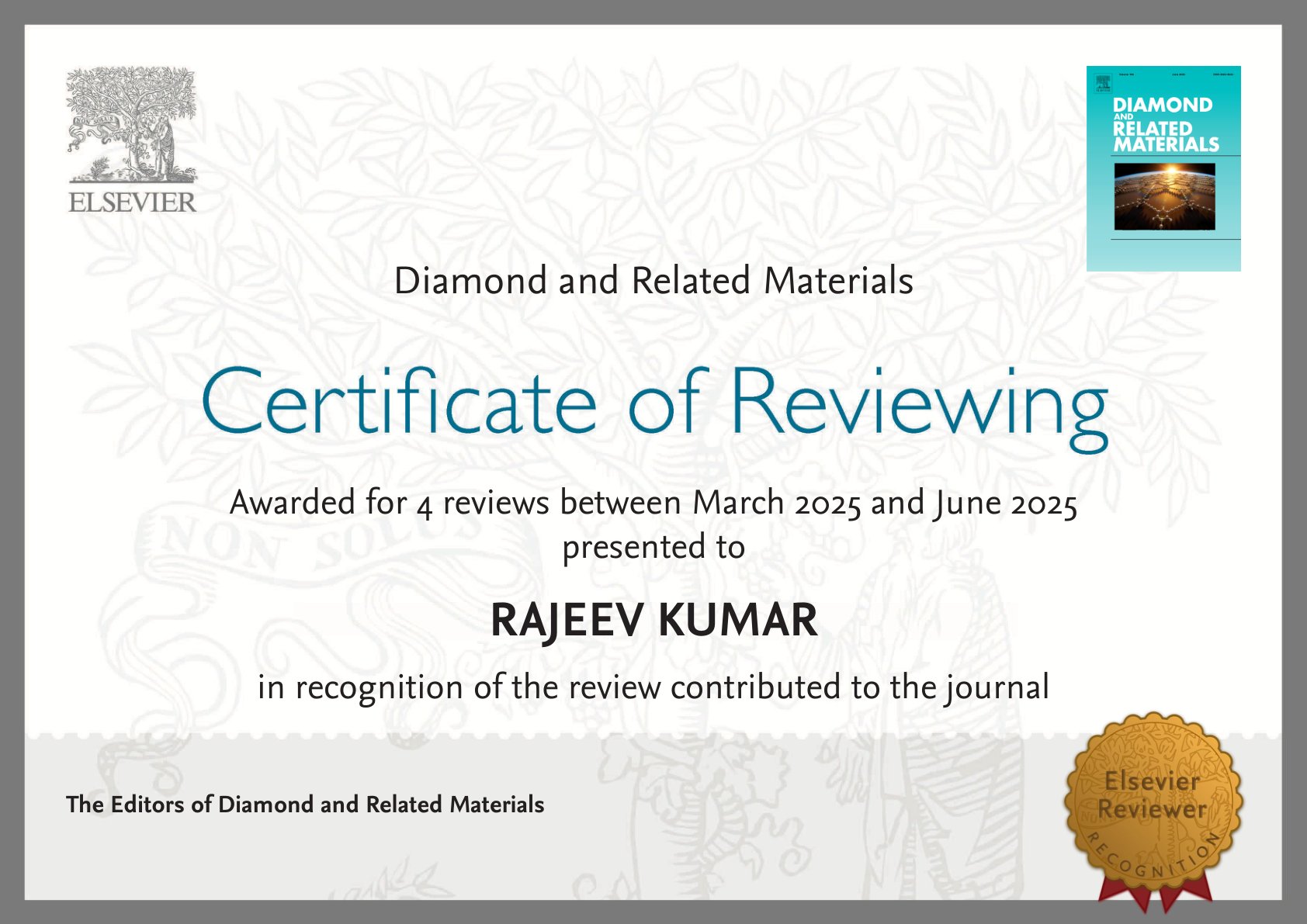
4 reviews · Between March 2025 and June 2025
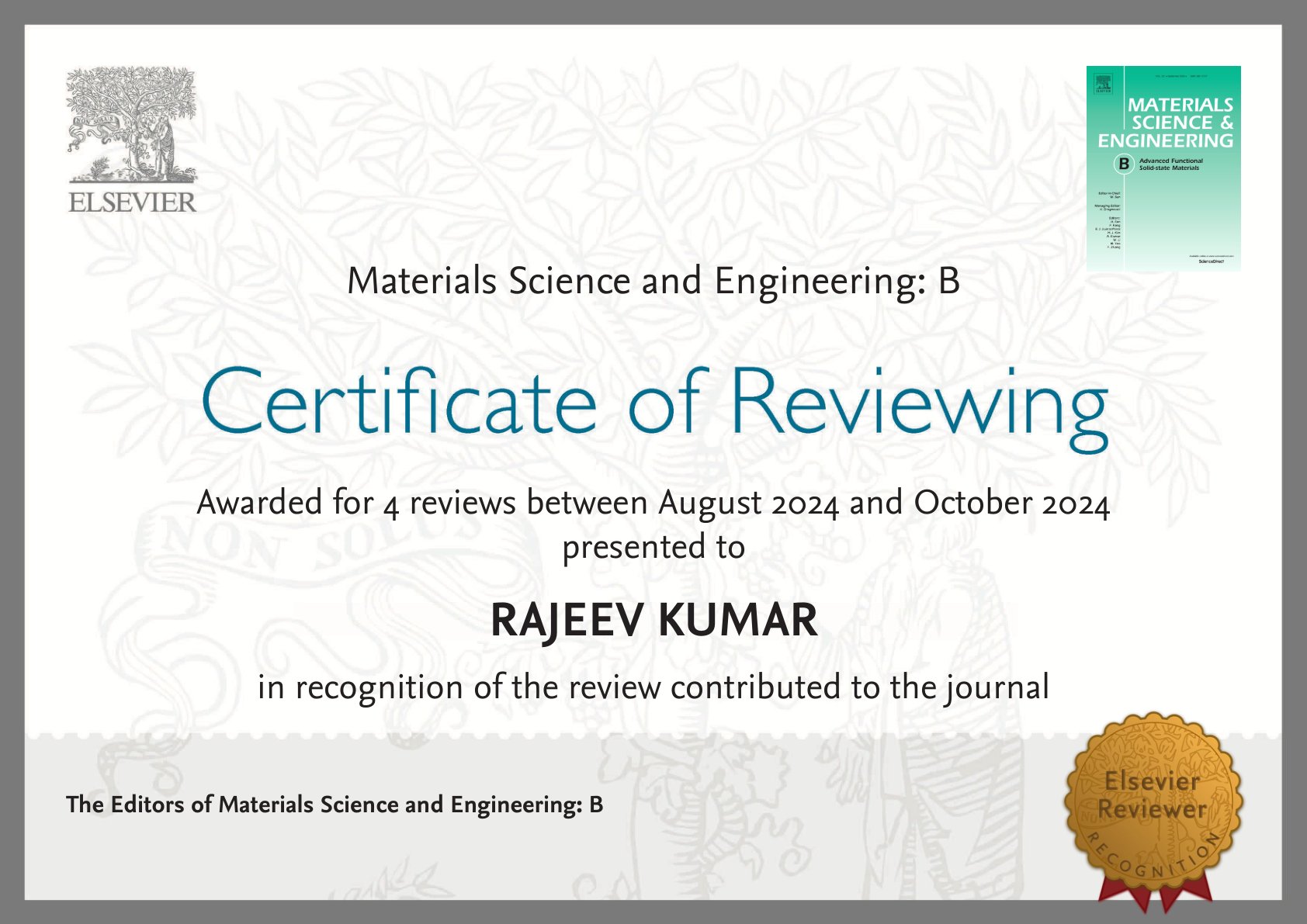
4 reviews · Between August 2024 and October 2024
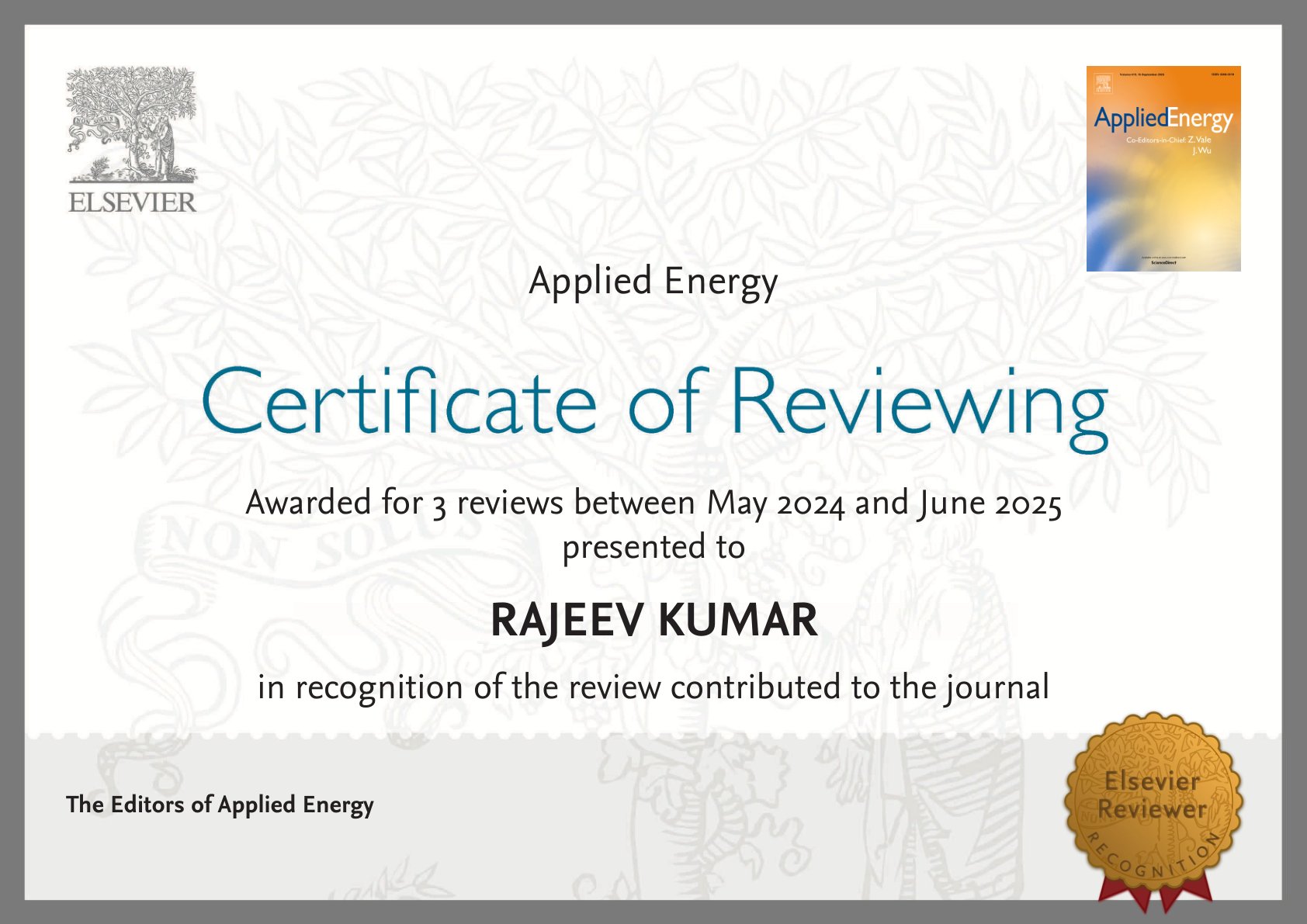
3 reviews · Between May 2024 and June 2025
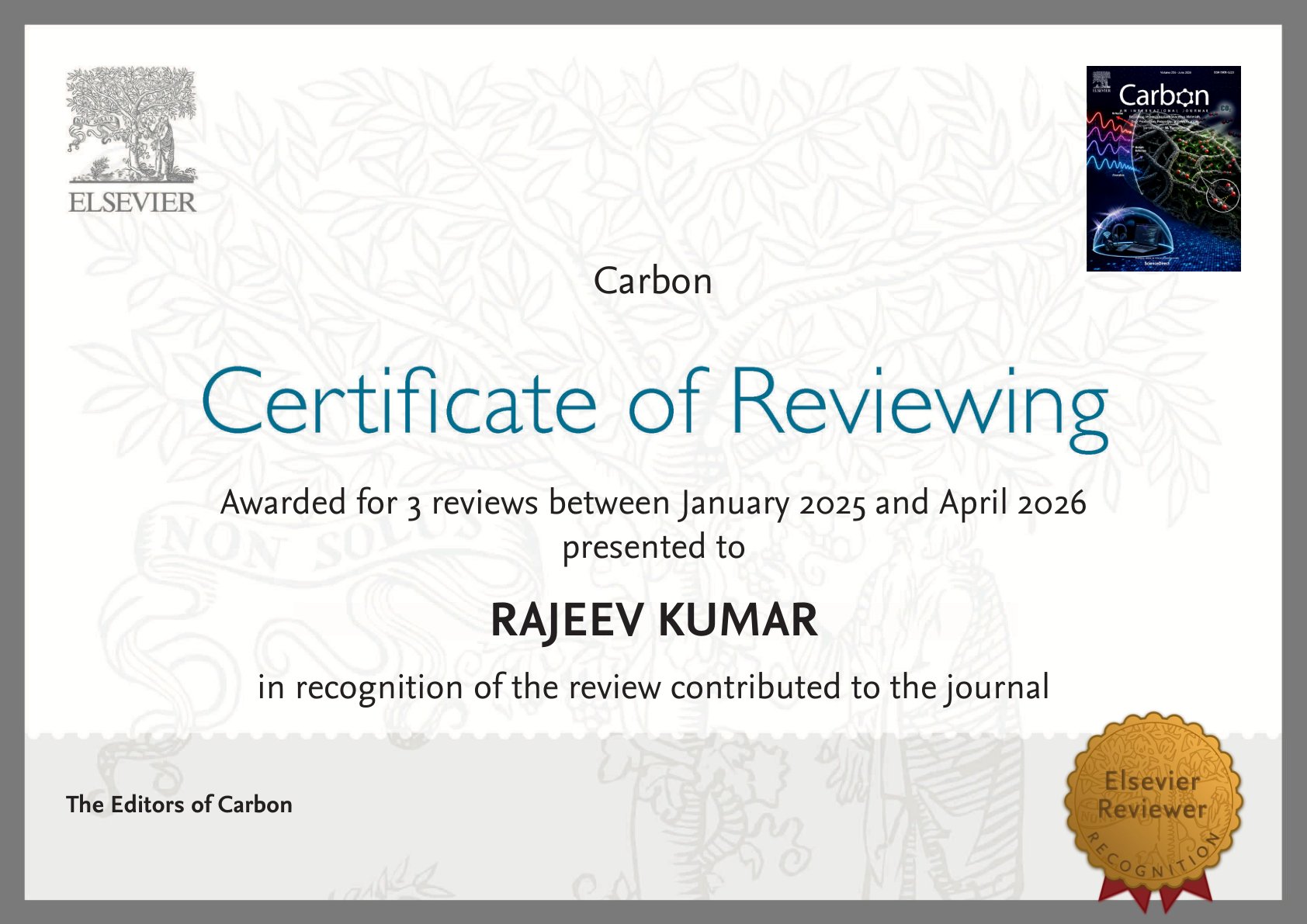
3 reviews · Between January 2025 and April 2026
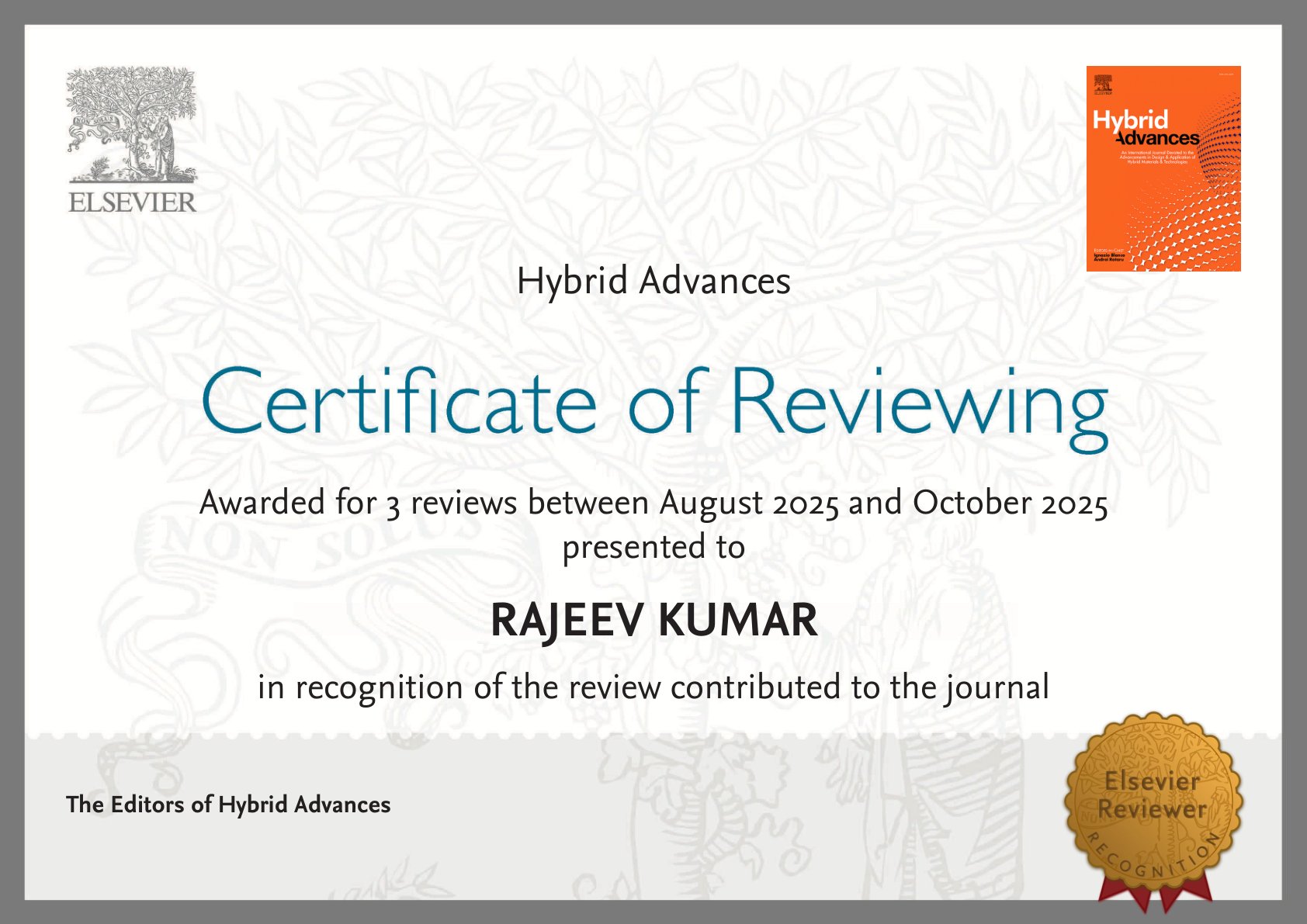
3 reviews · Between August 2025 and October 2025
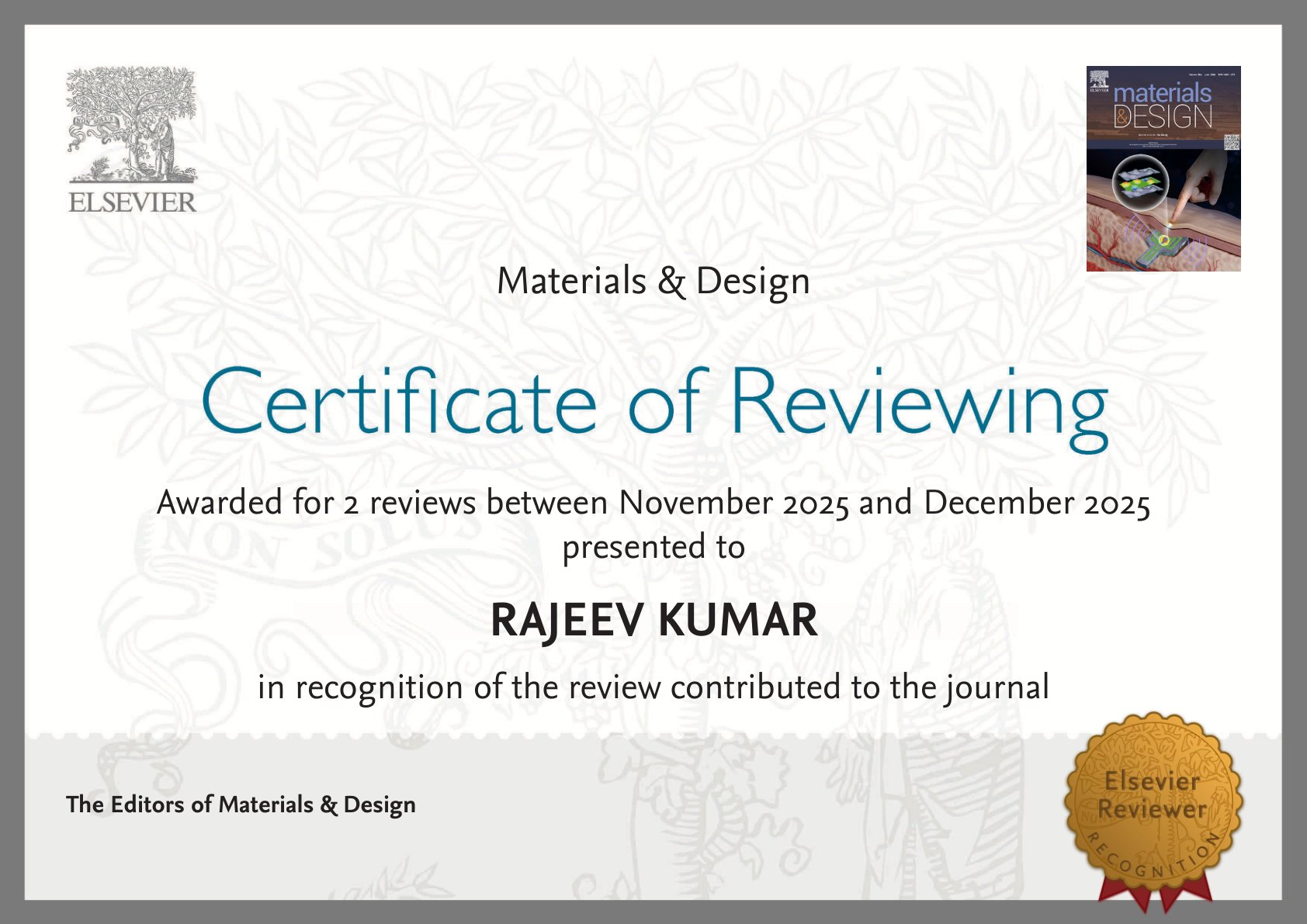
2 reviews · Between November 2025 and December 2025
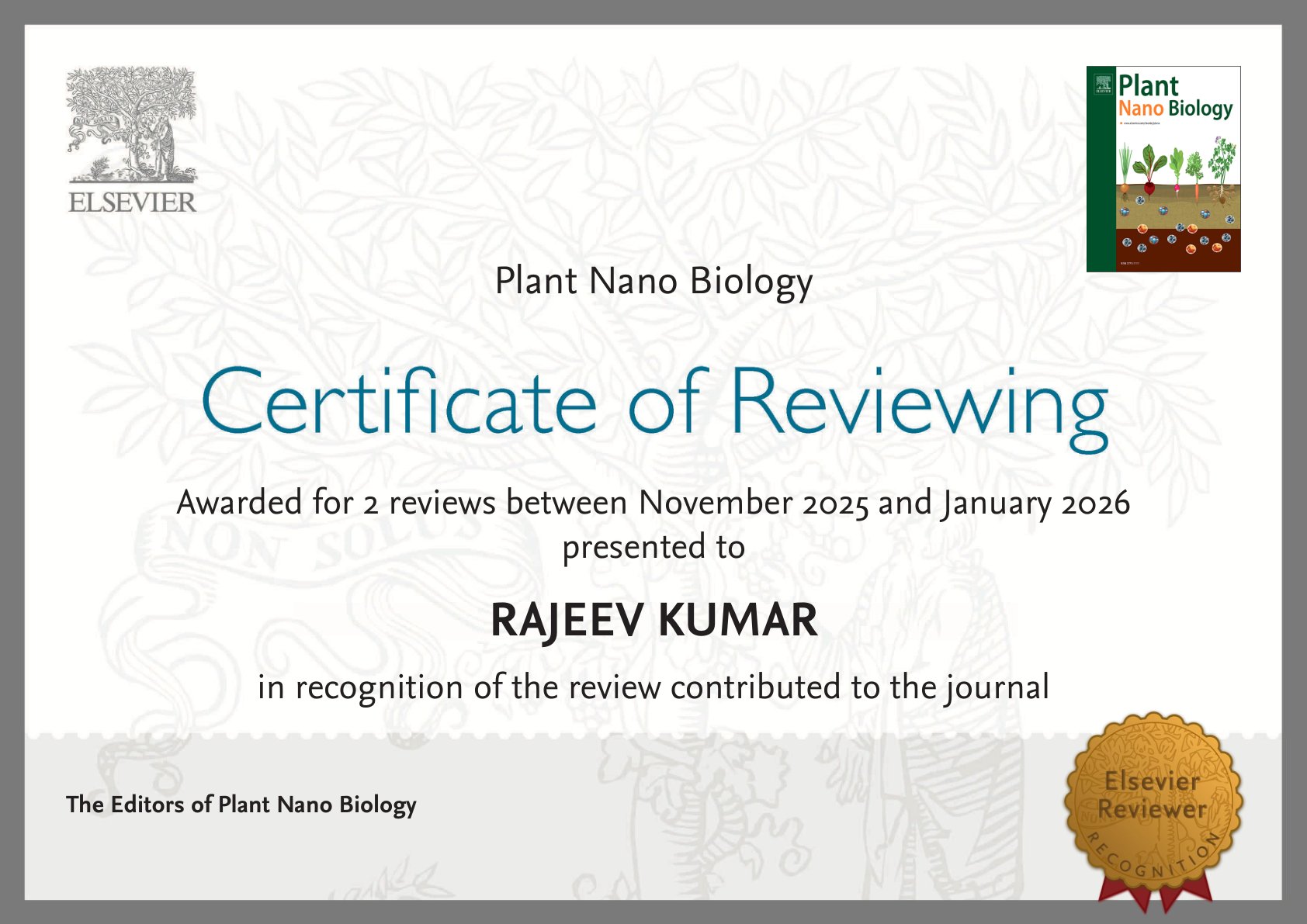
2 reviews · Between November 2025 and January 2026
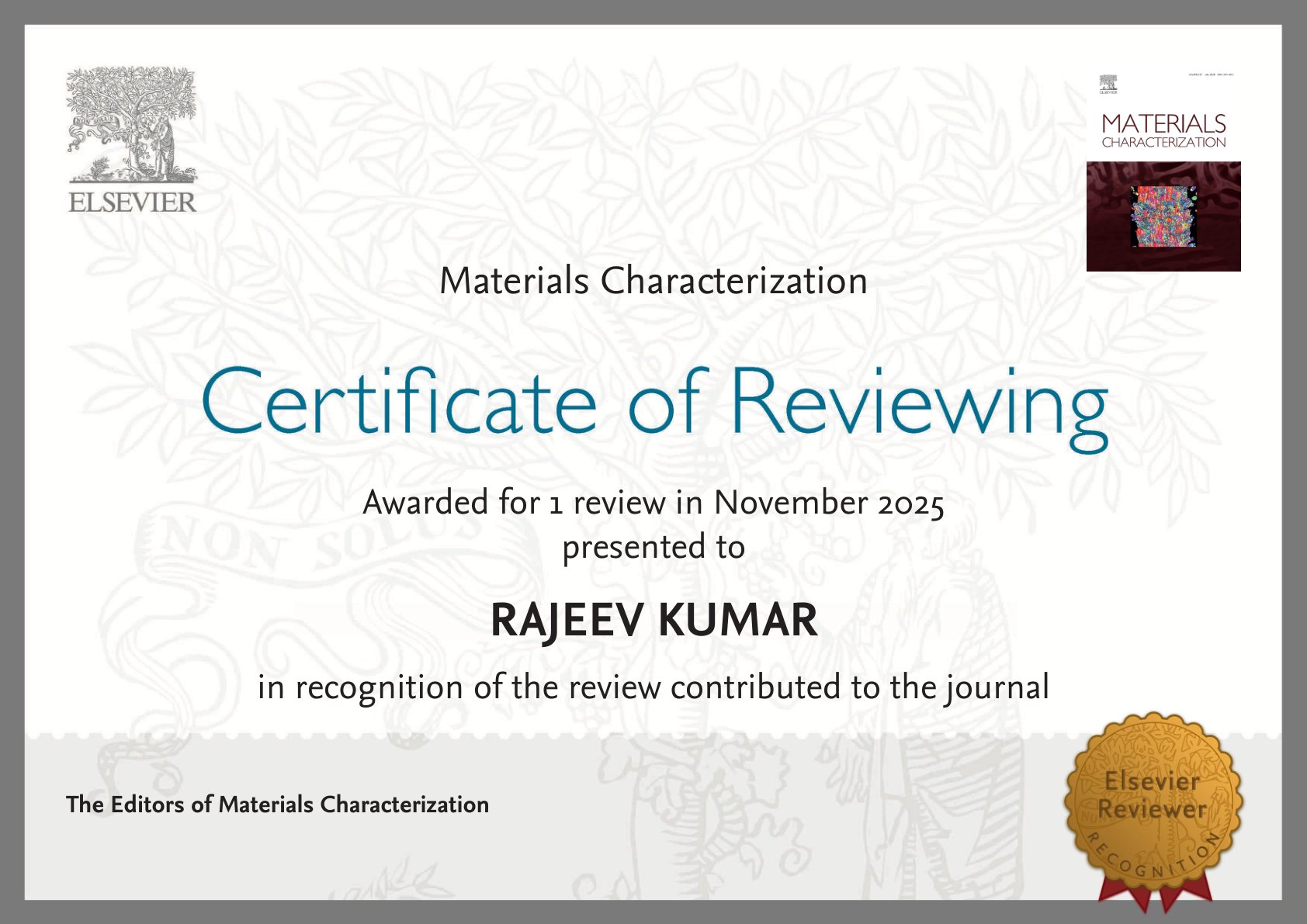
1 review · In November 2025
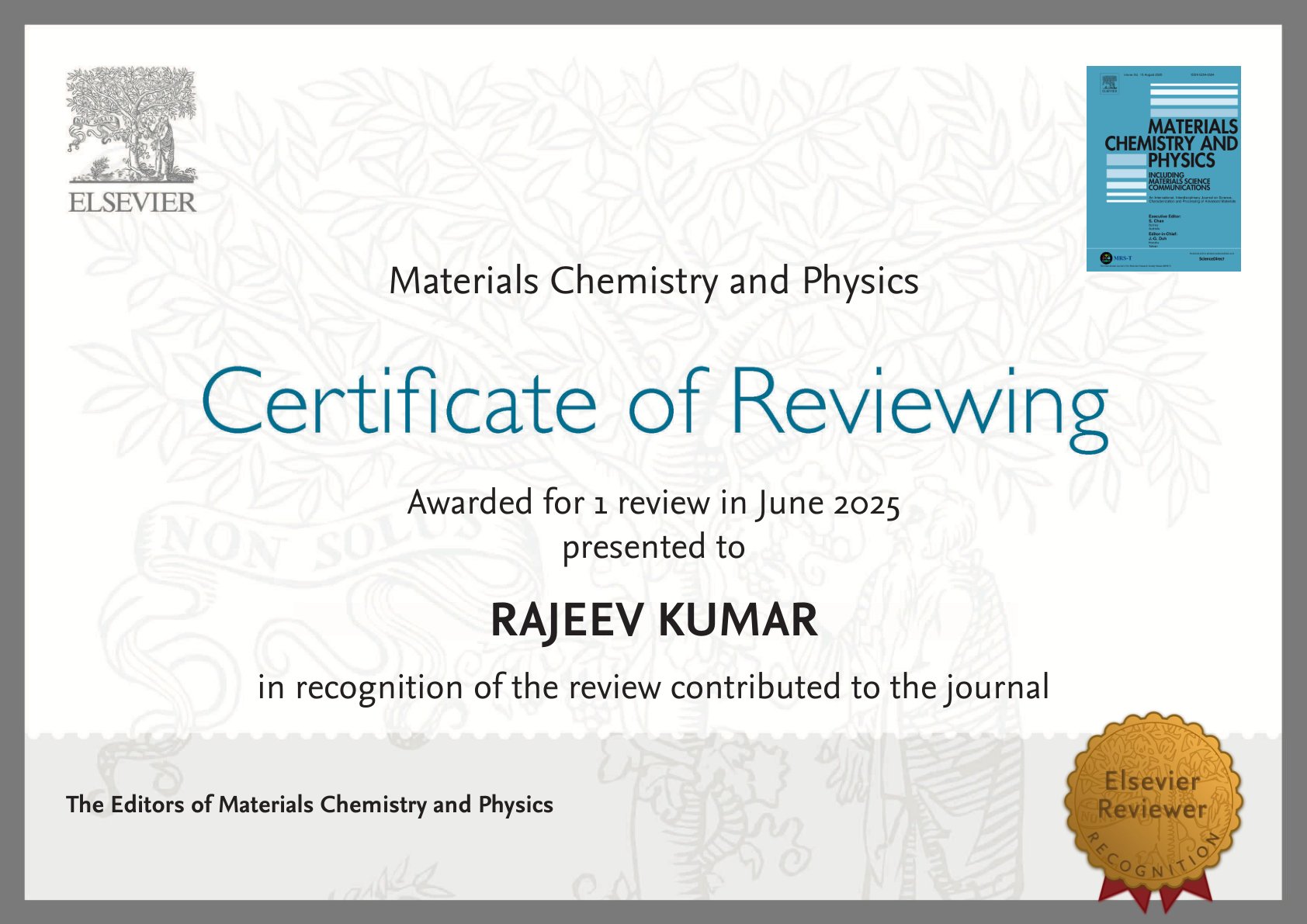
1 review · In June 2025
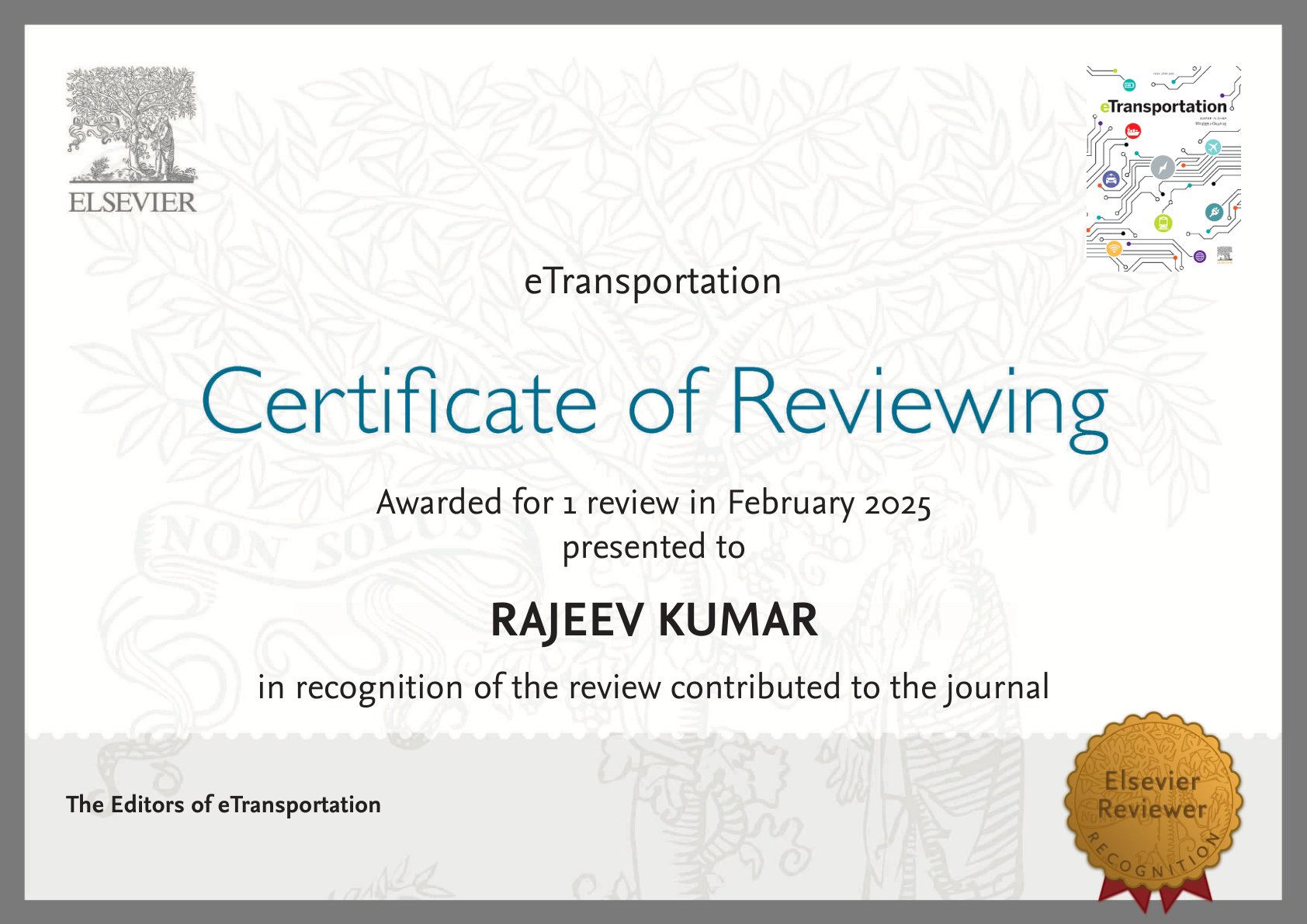
1 review · In February 2025
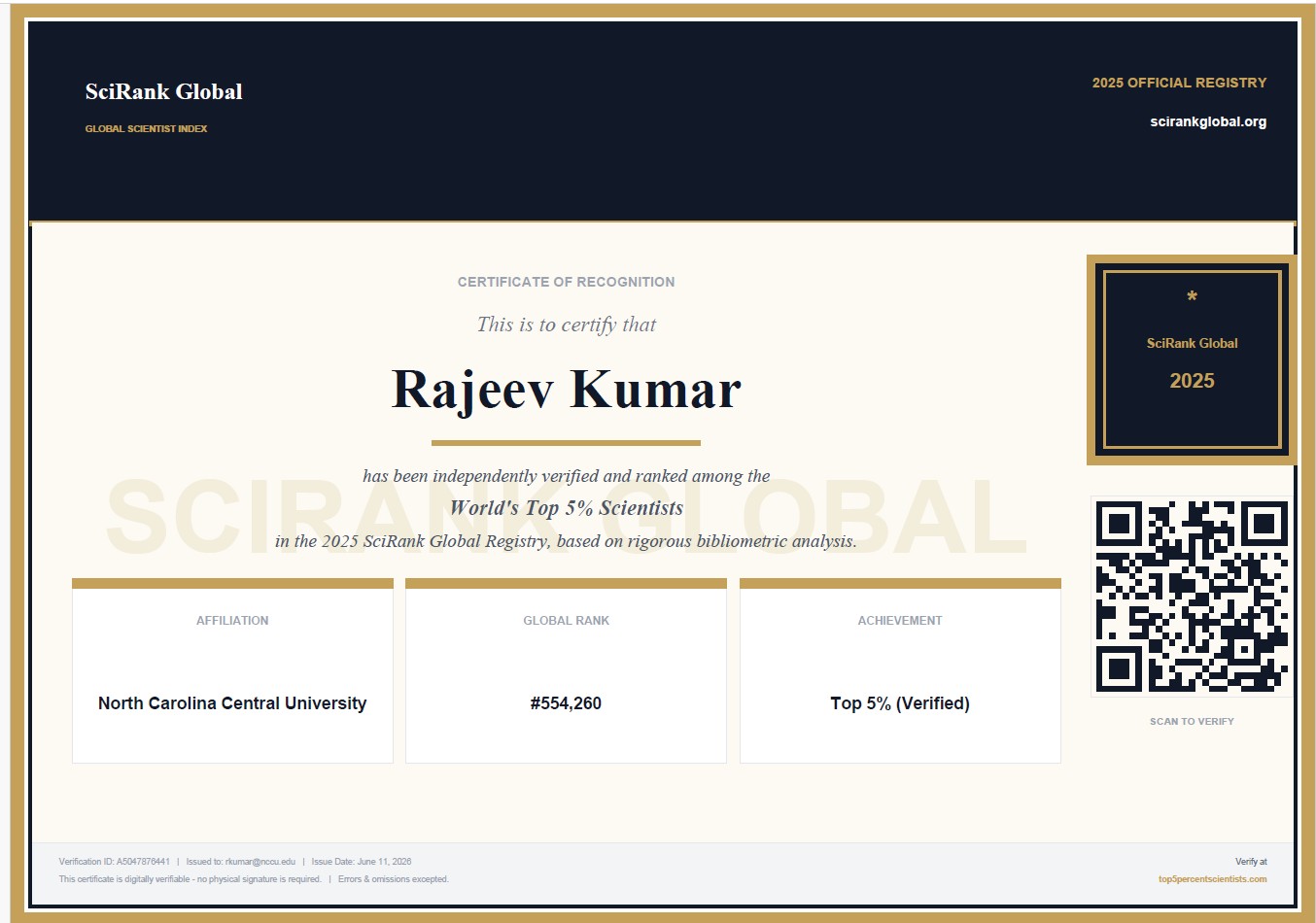
Independently verified and ranked among the world's top 5% of scientists in the 2025 SciRank Global Registry, based on bibliometric analysis of research impact.
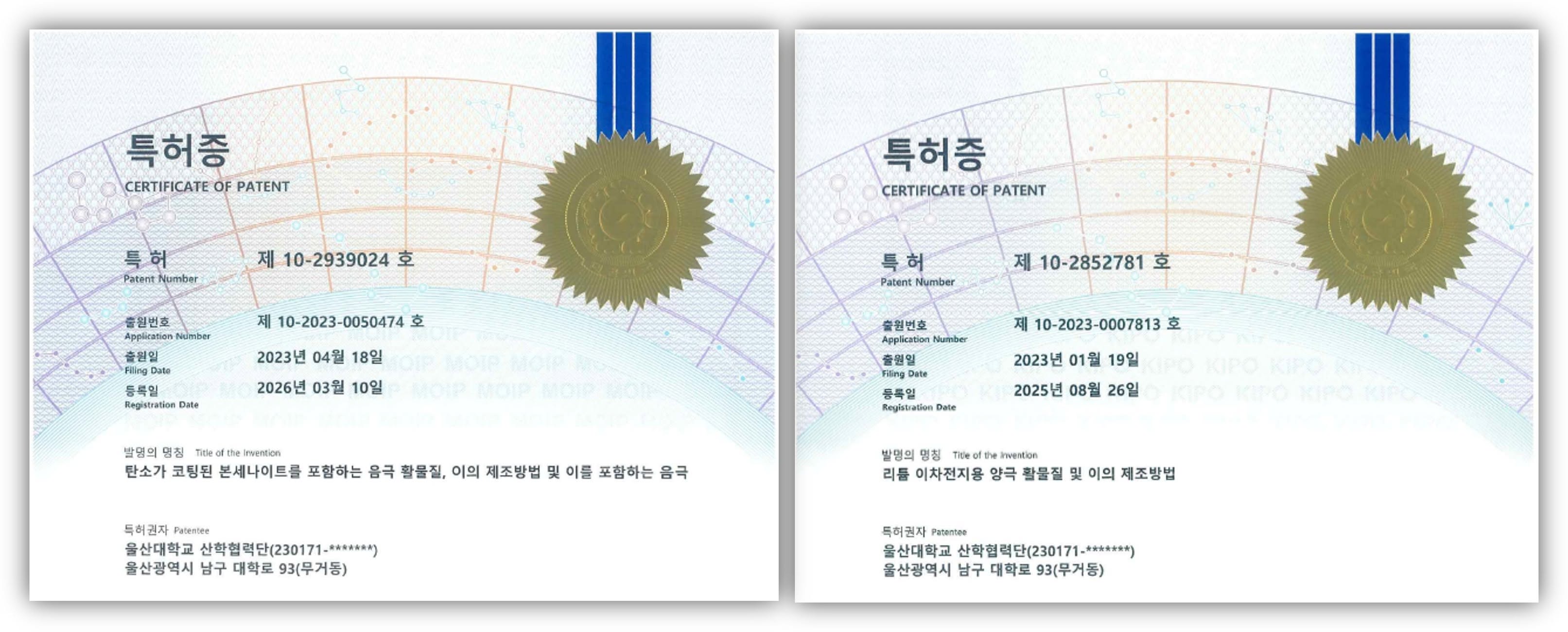
Two patents granted by the Korean Intellectual Property Office (with the University of Ulsan), covering carbon-coated electrode materials and lithium secondary-battery active materials and their fabrication.
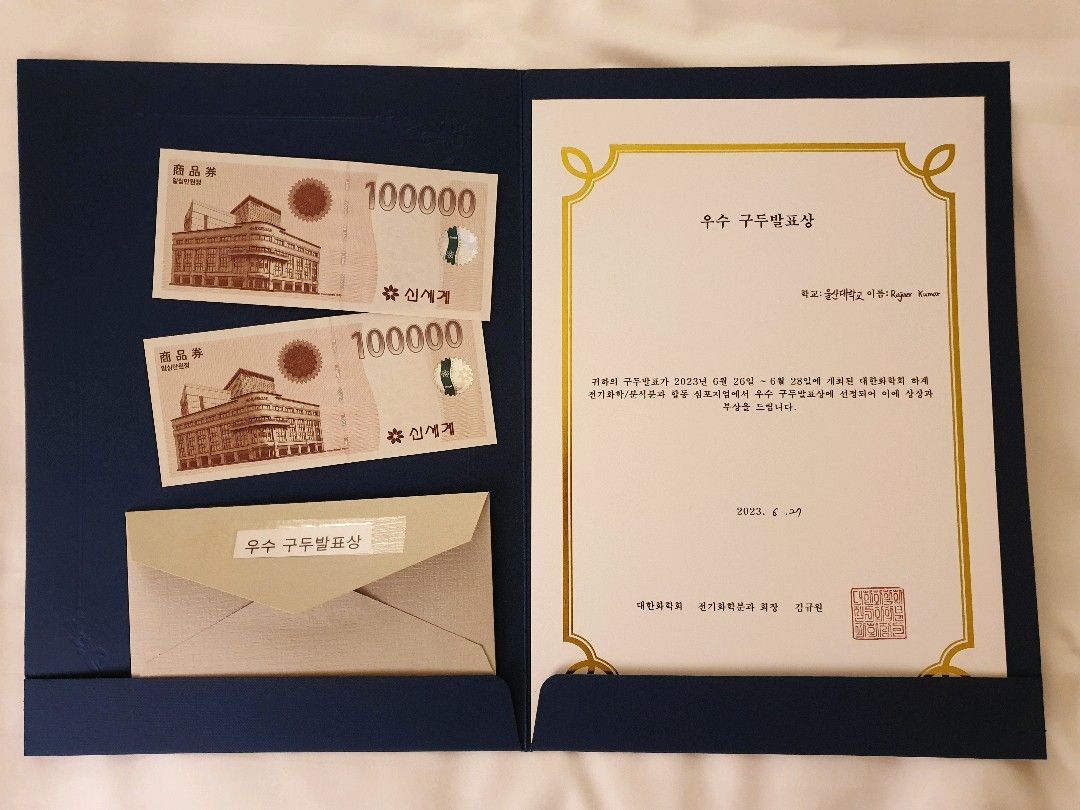
Awarded for an outstanding oral presentation at the Korean Chemical Society (대한화학회) Summer Joint Symposium, Electrochemistry Division, Jeju, Republic of Korea, June 2023.
Open-source tools that turn raw electrochemical data into clear, publication-ready insight.
An interactive electrochemical data analyzer built with Python, Streamlit, and Plotly — import, visualize, and process voltammetry and related data through a clean browser GUI, no scripting required.
A Streamlit web app that automates ohmic-drop (iR) compensation for linear-sweep voltammetry. It estimates uncompensated resistance from EIS data via Nyquist circle-fitting, then applies adjustable compensation factors to correct LSV curves — with batch processing, Excel/CSV import/export, and over-correction safeguards.
A growing family of technique-specific apps extending ElectroSim across common electrochemical methods:
New tools in the ElectroSim series are under active development and will be released publicly as they mature.
⚡ Built through vibe coding with AI pair-programming tools — Claude Code (Anthropic) and GitHub Copilot — AI-assisted, human-directed development.
A space for photos from conferences, the lab, and beyond.
Open to research collaborations, postdoctoral and faculty opportunities, and discussions on nanomaterials for energy and sensing.
📍 Department of Chemistry & Biochemistry, North Carolina Central University, Durham, NC 27707, USA